The hidden regulatory logic of cancer
Cancer genomes contain far more information than we currently understand. Although large-scale genomic studies have revealed many cancer-associated alterations, the functional roles of much of the genome—particularly its noncoding regions—remain unclear.
The Liang Lab combines cancer multi-omics, CRISPR-based functional genomics, and computational modeling to discover functional regulators, uncover their mechanisms, and identify potential therapeutic vulnerabilities.
01 / DISCOVER
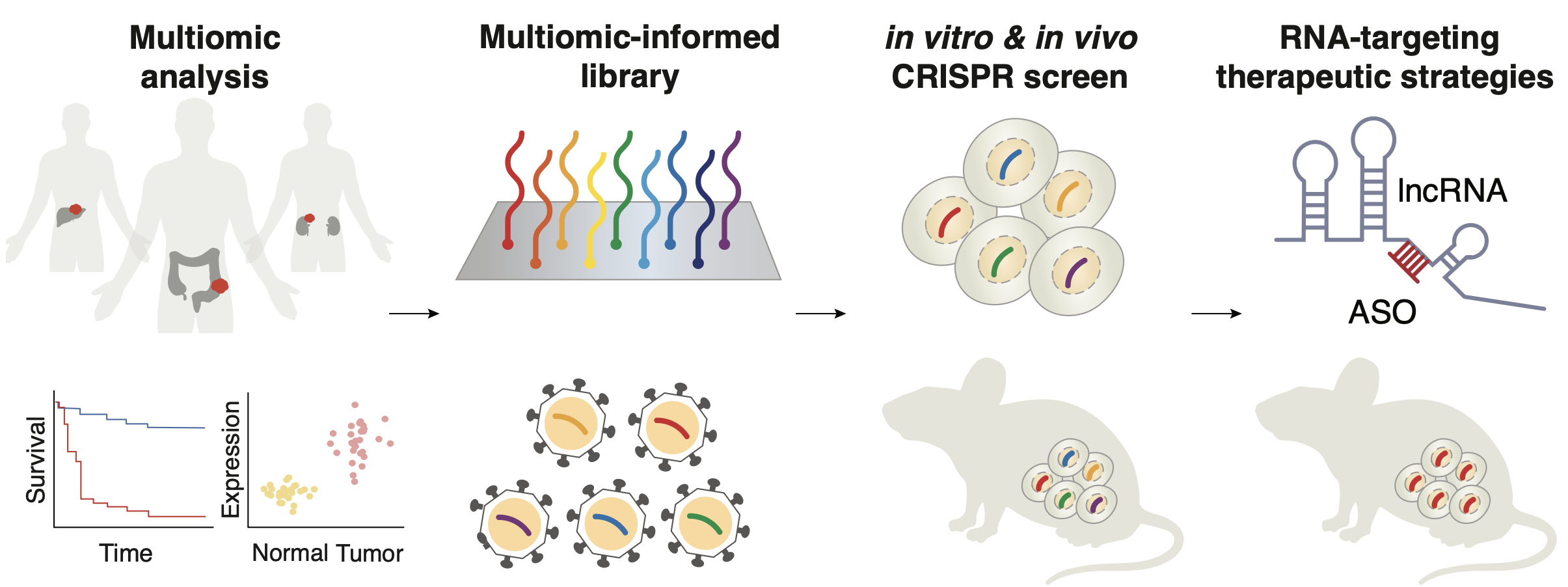
Discovering functional drivers of cancer
Which genes and regulatory elements actually contribute to cancer development and progression?
Large-scale cancer studies have uncovered thousands of molecular alterations, but distinguishing functional drivers from passengers remains a major challenge. This is particularly true for long noncoding RNAs (lncRNAs), whose roles cannot be reliably inferred from sequence or expression alone.
We integrate patient-derived multi-omic data with high-throughput CRISPR perturbation screens to identify regulators of cancer cell growth, survival, and malignant progression. By connecting molecular alterations to experimentally measured phenotypes, we seek to uncover dependencies that conventional genomic analyses may overlook.
02 / UNDERSTAND
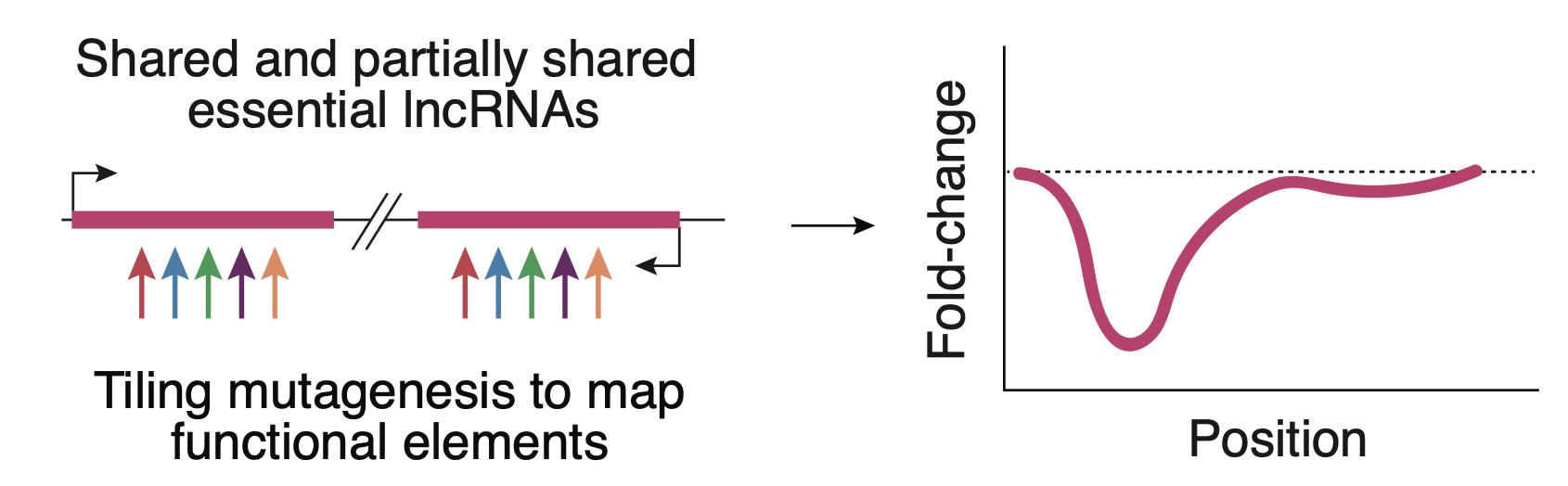
Decoding the mechanisms of RNA regulation
How do noncoding RNAs control gene expression and cancer cell behavior?
Unlike proteins, most lncRNAs lack well-characterized functional domains. Yet these molecules can influence regulatory networks, cellular identity, and disease-associated states through context-dependent mechanisms.
We combine systematic CRISPR perturbations with biochemical and molecular approaches to identify the functional elements and interactions underlying lncRNA activity. Linking RNA sequence features to molecular mechanisms and cellular phenotypes can reveal broader principles of RNA-mediated regulation.
03 / PREDICT
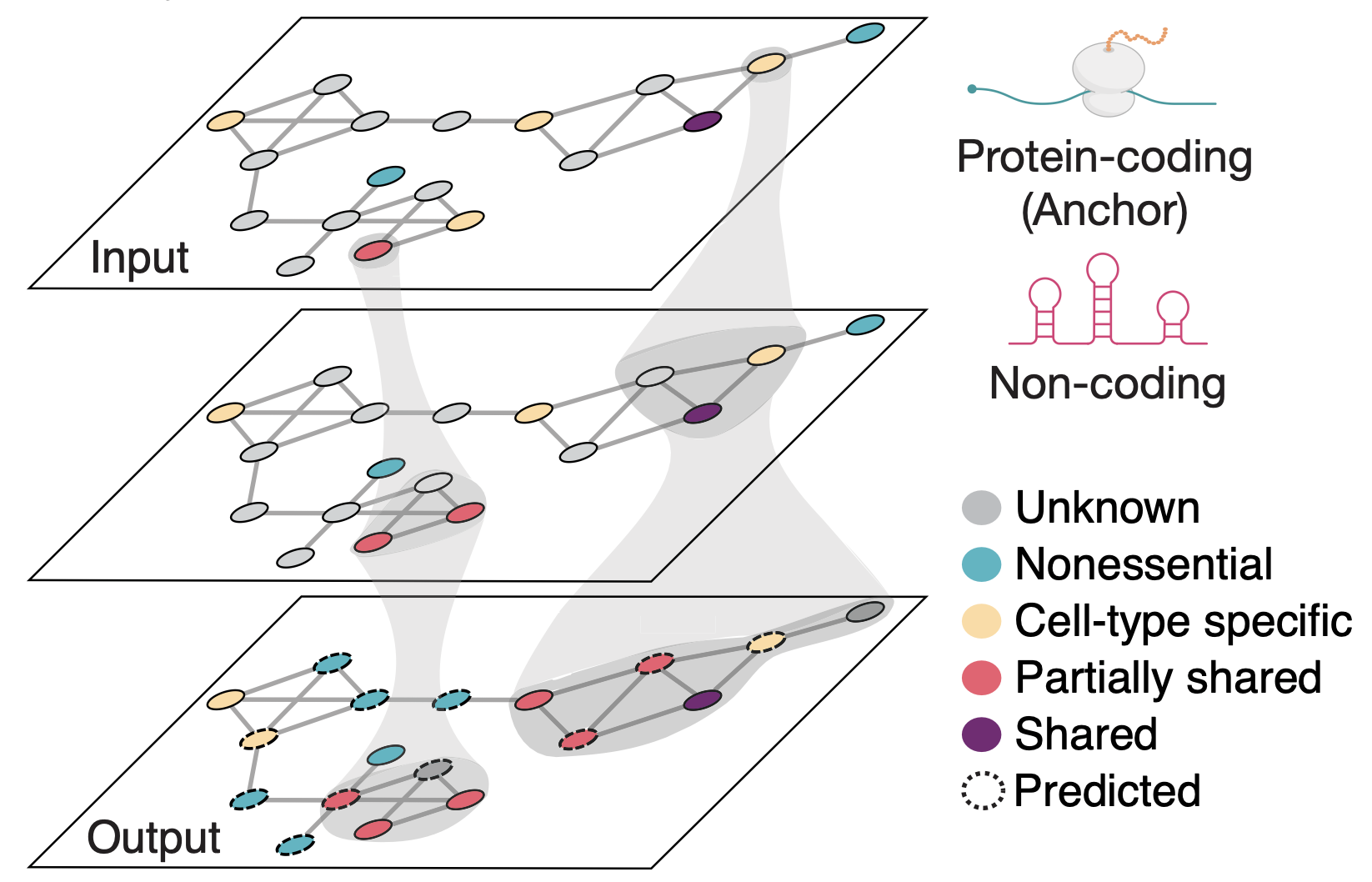
Predicting cancer vulnerabilities
Can we predict how cancer cells respond when their regulatory networks are disrupted?
Cancer cells rely on interconnected regulatory networks. Perturbing the same component can produce different outcomes depending on cellular context, expression dosage, and interactions with other genes.
We integrate single-cell perturbation data, cancer multi-omics, and machine learning to model regulatory dependencies and predict cellular responses. We then test these predictions experimentally to identify context-specific dependencies, genetic interactions, and potential therapeutic vulnerabilities.
HOW WE WORK
Our Approach
Our research brings together two complementary strengths: large-scale analysis of cancer data and direct experimental tests of gene function. Observational data reveal patterns and generate hypotheses; CRISPR perturbations establish causal relationships; computational models turn these results into testable predictions.
Learn from cancer data
Integrate patient-derived genomics, epigenomics, transcriptomics, and single-cell profiles.
Test function experimentally
Use CRISPR-based perturbations and molecular assays to measure causal effects.
Build and refine models
Predict regulatory relationships and validate them in new experiments.